- Home
- Articles
Articles
Drilling engineering, worked through.
Methods drilling engineers use every day, each worked through on an example well with the engines DrillIQ runs: the equations, a hand check, the charts and what to do on the rig. The examples are set in typical conditions of Cooper Basin, Australia, Llanos Basin, Colombia, Llanos foothills, Colombia, North Oman, Western Desert, Egypt, onshore Abu Dhabi, UAE and onshore Kuwait.
Well engineering
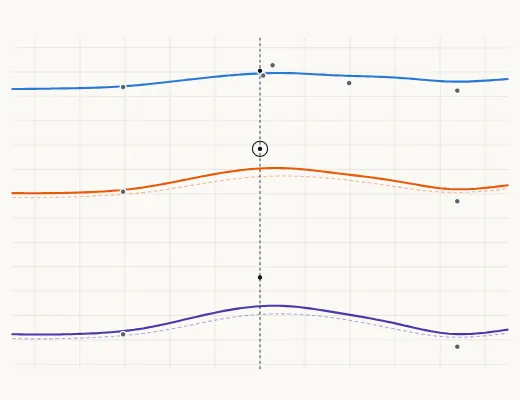
A basin atlas and offset wells: tops, thickness and the next prognosis
A gas well on a ridge prognosed from 13 offsets: a structure grid checked by hand, isopachs on the best-controlled top, an honest ± per top from leave-one-out, and why one crestal analog beat the average by 30 m.
10 min read · Cooper Basin, Australia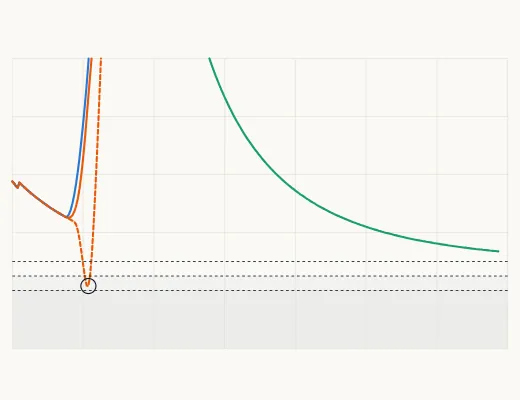
Anti-collision: separation factor, ellipses and travelling cylinder
A five-slot pad worked through: why a plan that heads straight for its target passes 3.5 m from a neighbour at SF 1.08, how a nudge fixes it, what the travelling cylinder shows, and why 80 m apart at TD is only SF 1.67.
12 min read · Llanos Basin, Colombia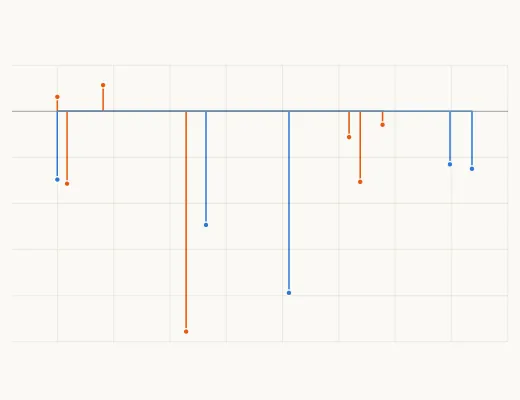
BHA design: stabilizer placement, side forces and bit tilt
Packed against pendulum in a drifting vertical hole: wall contacts, a hand check of the drop force, where to put the first stabilizer, and what weight on bit does to the rate.
12 min read · Llanos foothills, Colombia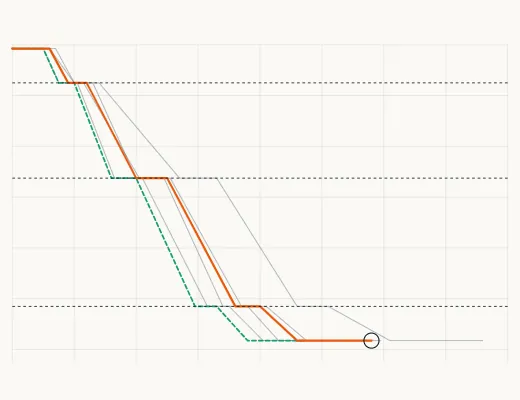
Building a drilling programme from offset data
Four offsets turned into a 29-day programme for a vertical producer: casing seats from the loss zones and the window, a draft with two errors the checks caught, step times at the offsets' median, and 2.92 million USD by section.
12 min read · onshore Kuwait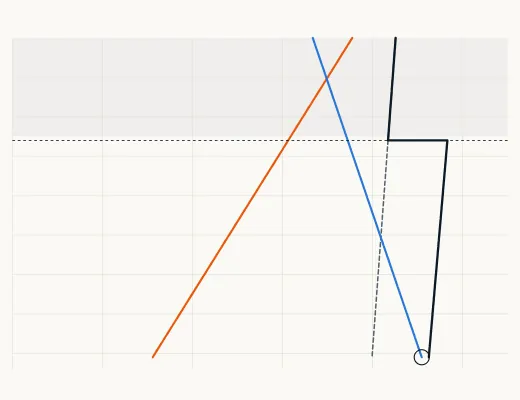
Casing design load cases: burst, collapse and triaxial
Burst, collapse, axial and triaxial checks along a 9⅝″ intermediate string through a pressured section: why the pressure test governs at the shoe, how temperature and sour gas set the grade taper, and where von Mises bites.
12 min read · onshore Kuwait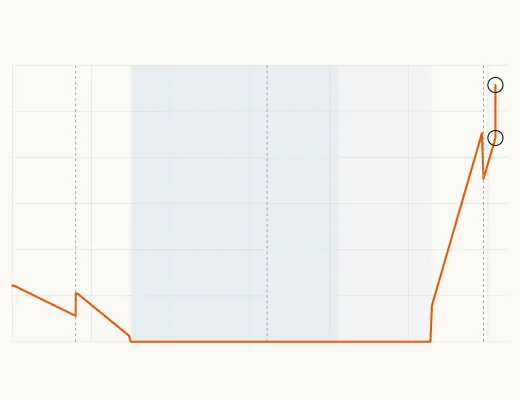
Cement placement: ECD, free-fall and the lift pressure
A 5½″ production casing job in a 171 °C tight-gas well: why the first plan broke the design margin at an aquifer, the free-fall the crew should expect, and what the lift pressure tells you.
13 min read · Cooper Basin, Australia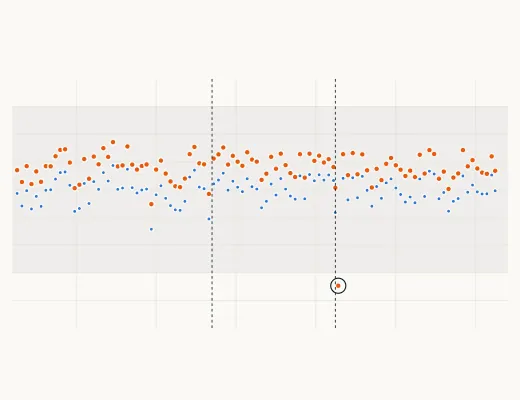
Directional survey quality: magnetic corrections, sag and gross errors
A horizontal well near the equator surveyed station by station: why an east-west lateral passes every total-field check while 0.66° off in azimuth, what MSA and sag corrections recover, and the gross errors no tolerance band catches.
13 min read · Llanos Basin, Colombia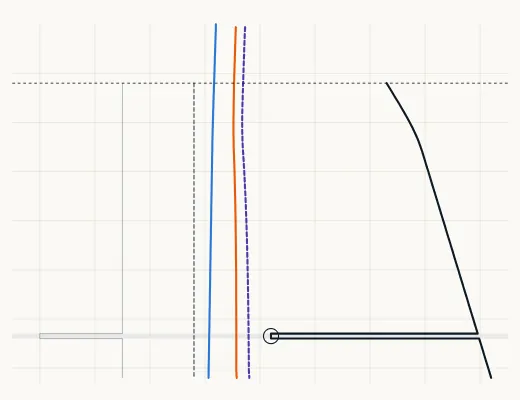
Hydraulics, ECD and hole cleaning, worked through
Herschel–Bulkley against Bingham, a hand check of the annular loss, ECD at a depleted sand, and the flow rate a 60° 12¼″ tangent needs against the pump limit.
12 min read · Llanos Basin, Colombia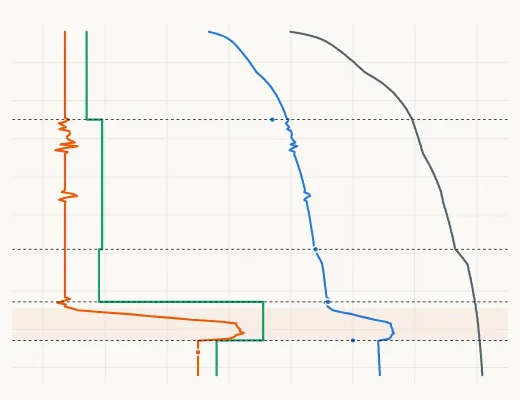
Pore pressure, fracture gradient and the mud-weight window
A deep gas well's window built from its logs: Eaton by hand at 4,000 m, the top of overpressure from the sonic trend, three methods and their spread, a fracture gradient fitted to leak-off tests, and why pressure alone picks too few casing seats.
13 min read · onshore Abu Dhabi, UAE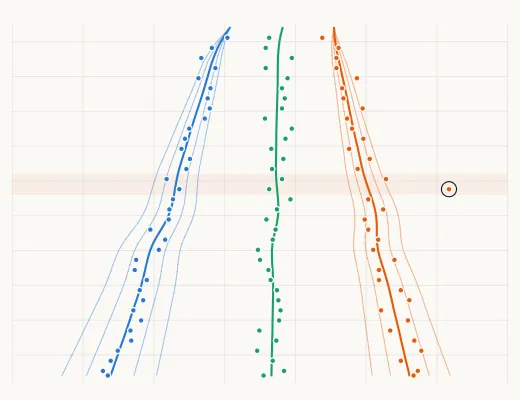
Torque and drag, worked through on a 1,000 m lateral
The soft-string equations, a hand calculation you can check, the broomstick plot with a tight spot in it, friction calibration from 35 stands, and the weight on bit at which a sliding string locks up.
11 min read · North Oman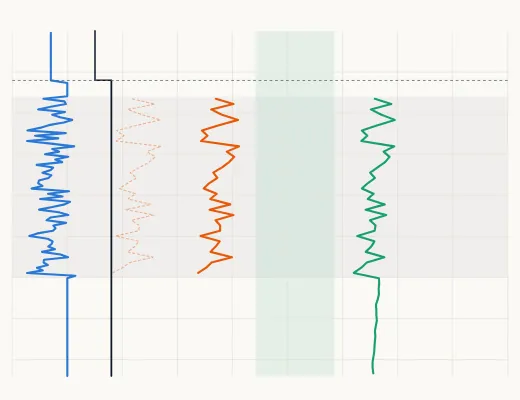
Wellbore stability: collapse pressure, breakouts and the mud weight
A 50° well through a Lower Cretaceous shale: collapse checked by hand at 1.25 SG vertical, 1.39 SG on the plan, the effect of azimuth and of the failure criterion, breakout width against mud weight, and a casing point it moves.
11 min read · onshore KuwaitDrilling operations
Bit dull grading with the IADC code, and what it tells the next run
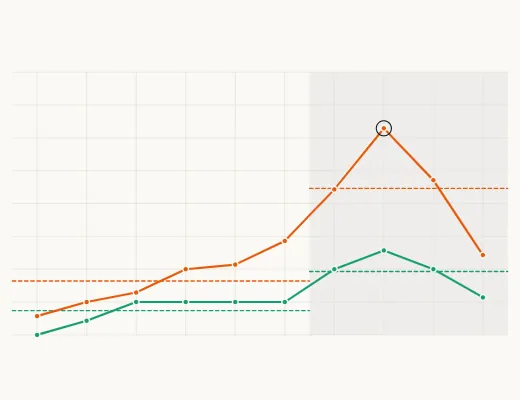
The eight IADC positions, a cutter map that gives a worn PDC its 2-4, cost per metre on one basis for six runs, a pull the cost rule called early and the dull called right, and the bit chosen for the next well.
12 min read · Cooper Basin, Australia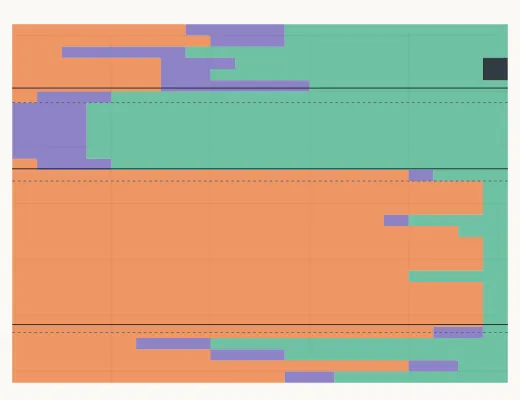
Cuttings, lithology and the mud log, from shakers to formation tops
An 8½″ section from the shakers to the tops: the lag checked by hand and by carbide, a lithology column read sample by sample, 33 drill breaks and the one that mattered, and a reservoir top revised to within 2 m.
13 min read · Llanos Basin, Colombia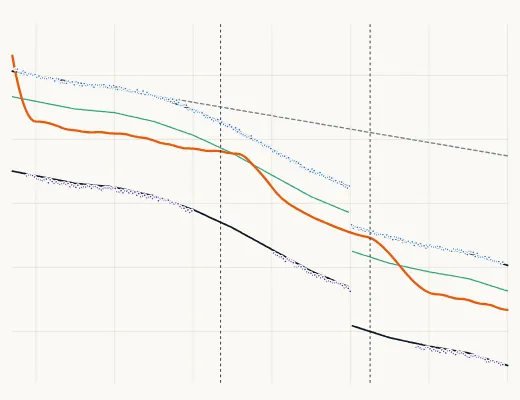
Geosteering a thin carbonate with a typewell and deep resistivity
How a typewell and deep-resistivity boundary distances steer a lateral through an 8 m carbonate: a flank the gamma ray missed for 45 m, a 2.9 m fault read as a step, and 86 % of the lateral in the best layer.
12 min read · onshore Abu Dhabi, UAE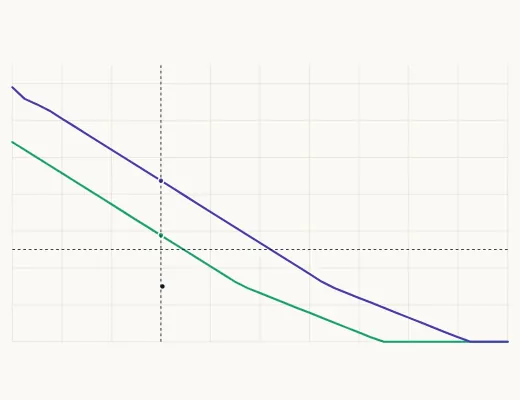
Kick tolerance and the kill sheet, worked through
The bottom and shoe checks of kick tolerance by hand, how the tolerance falls with kick intensity and with a weaker shoe test, the kill sheet for a 15 bbl gas kick, and why casing pressure may pass MAASP once the gas is above the shoe.
13 min read · onshore Abu Dhabi, UAE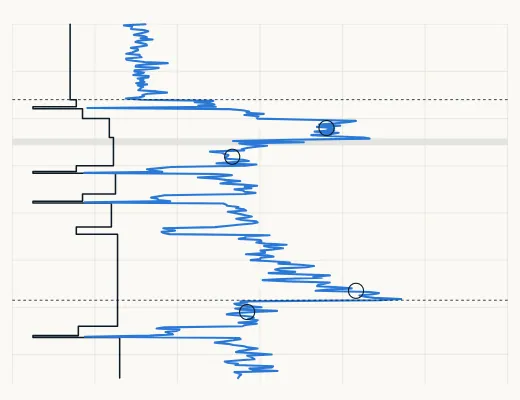
MSE and ROP optimisation, worked through on a drilled section
Surface and downhole MSE with a hand check, three drill-off tests that put the founder at 24 klbf, and an 8½″ log where MSE against rock strength shows a foundered bit and then a dull one.
13 min read · Cooper Basin, Australia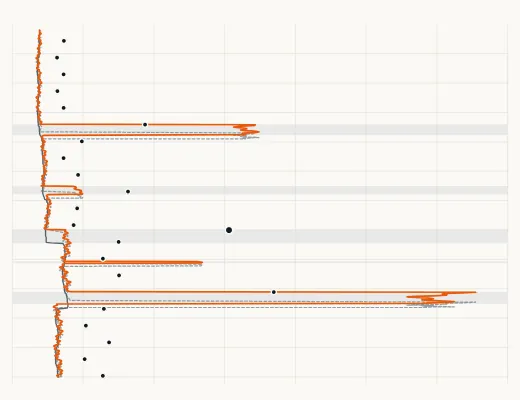
Mud gas analysis: wetness, balance and character ratios
Four shows on one 8½″ section: a light oil that only reads as oil once the trap is corrected, residual oil with a falling Pixler ladder, a coal with Bh 126, and a wet gas logged 17 m too deep without lag.
11 min read · Western Desert, Egypt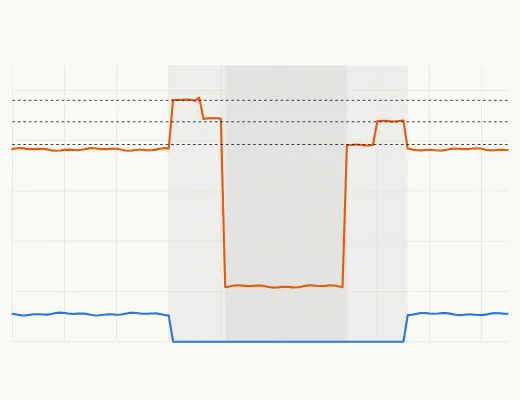
Real-time drilling monitoring: what to watch, and when to call
Twenty-one hours of a lateral read channel by channel: a connection against the model's weights, a 5 bbl pit gain that one rule caught in 9 minutes and another never saw, 104 automatic alarms against 5 useful ones, and a feed that went silent.
12 min read · North Oman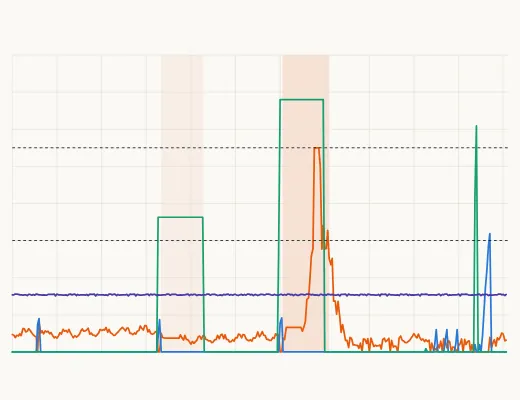
Stuck pipe: the early signs and the three mechanisms
Pack-off, differential sticking and geometry: the signs of each, how to score them, a replayed tight-hole event caught 7 hours ahead, and the free point in a deviated hole.
13 min read · North Oman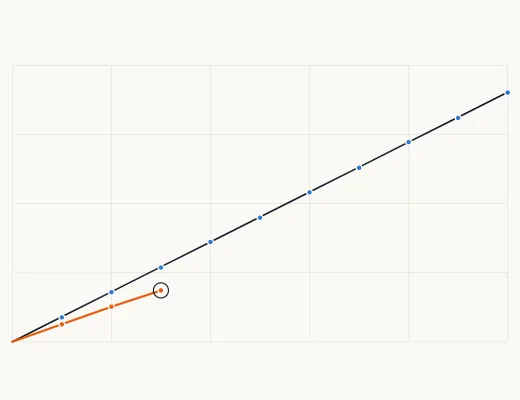
Trip monitoring: the trip sheet, surge and swab
Expected against measured fill stand by stand, a swab model with a hand check, a safe pulling speed that rises from 418 m/h at TD to the crew limit at the shoe, and a trip sheet that stopped a trip after three short stands.
12 min read · onshore KuwaitPerformance & cost
AFE and cost against plan, from estimate to close-out
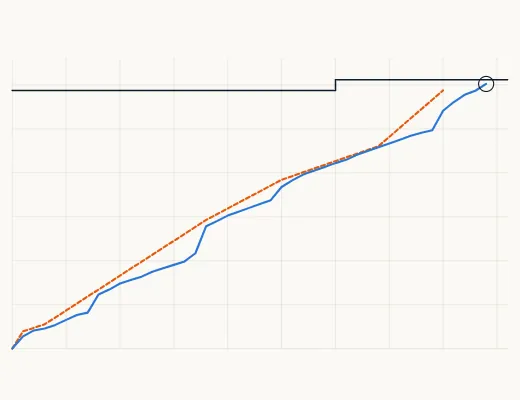
A 5.87 million USD AFE for a horizontal well, tracked through 44 daily cost reports: the planned curve, two estimates at completion with a hand check, a supplement for a longer drain, and what the contingency paid for.
13 min read · onshore Abu Dhabi, UAE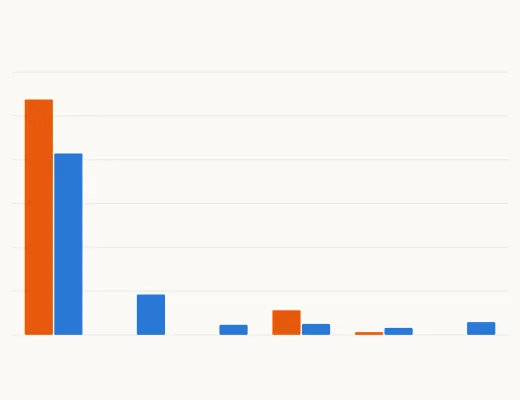
Daily drilling reports: what to automate and what to check
A 24-hour report day in an 8½″ hole set beside the surface sensors: 21.5 h of 'drilling' held 16.6 h on bottom, and an hour of static time was booked as circulating. Then 16 reports through the checks.
11 min read · Llanos Basin, Colombia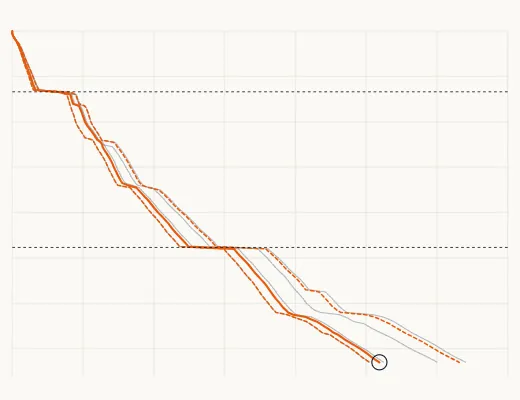
Forecasting a well before spud from its offsets
Seven offsets, five analog weights and one P10–P90 fan: a 3,650 m well forecast at 20.8 days P50, its risks by formation, and a leave-one-out backtest that shows where days forecasts go wrong.
12 min read · Western Desert, Egypt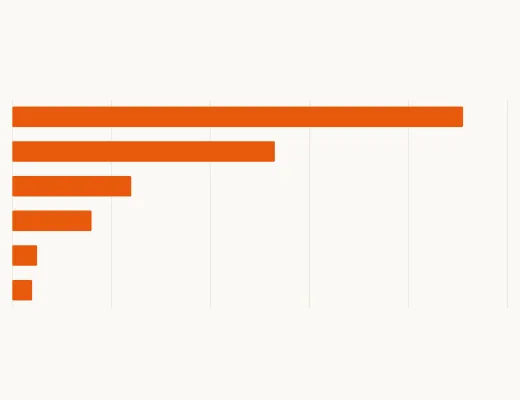
NPT and invisible lost time: measuring it and cutting it
An NPT Pareto for nine laterals, what its equipment share says about maintenance, and connections and trips measured stand by stand against the best composite: 33 hours of invisible lost time.
11 min read · North Oman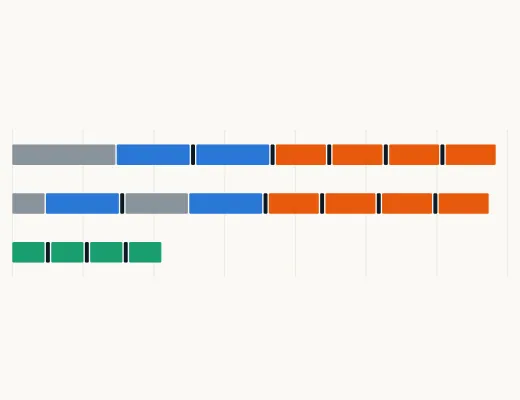
Rig scheduling: sequencing wells across a fleet
Sixteen wells on three rigs, changed one decision at a time: pad batching, maintenance timing and pad readiness move the P90 finish 65 days earlier, and one schedule that looked faster was riskier.
11 min read · North Oman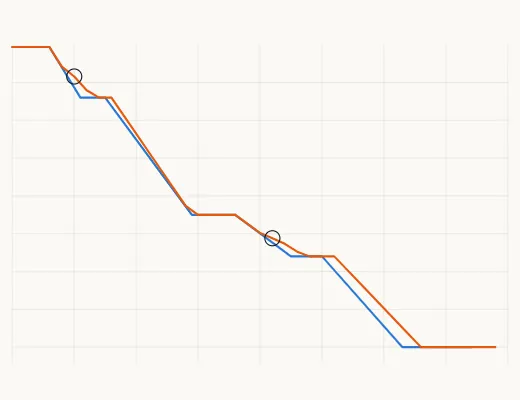
The end-of-well report: turning one well into the next well's plan
A horizontal well two days over its programme, explained day by day: 37.2 hours of NPT, 19.1 hours of invisible lost time in trips, connections and casing, and a next programme of 35.9 days built from what the well showed is achievable.
11 min read · onshore Abu Dhabi, UAEData & platform
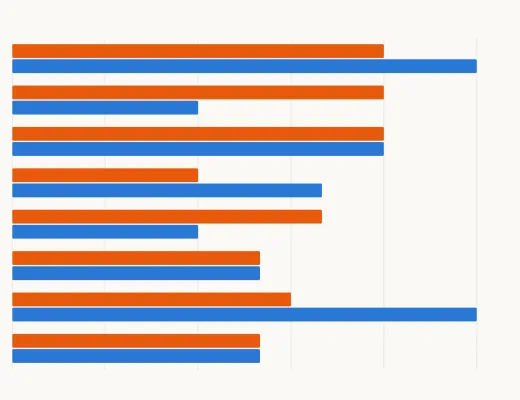
How to evaluate a drilling analytics platform
The questions and tests that separate drilling platforms on your own data, how to design a trial that produces evidence, and a worked scoring example where the higher score loses on a gate.
9 min read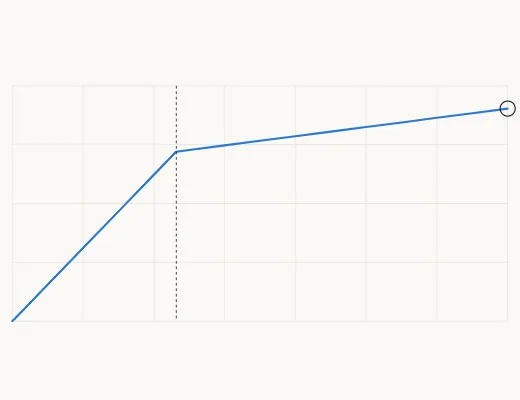
On-premises deployment and drilling data sovereignty
Why drilling data often has to stay in-country or on-premises, what runs at the rig and in the office, how much a rig buffers through a link outage and how long it takes to catch up, and how updates and security work.
10 min read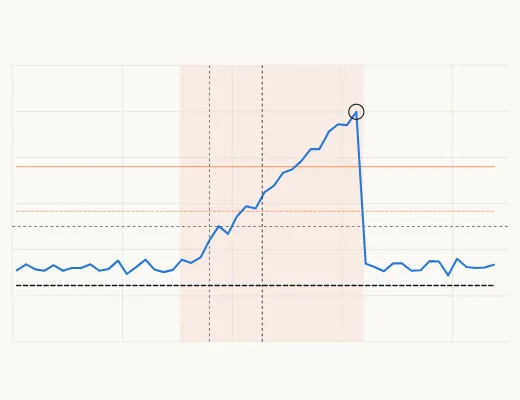
Predictive drilling analytics: physics, rules and machine learning
What predictive means on a rig, and three pack-off detectors on the same 21 hours: a fixed limit, an automatic band and a physics residual, with the lead times and false alarms of each.
12 min read · North Oman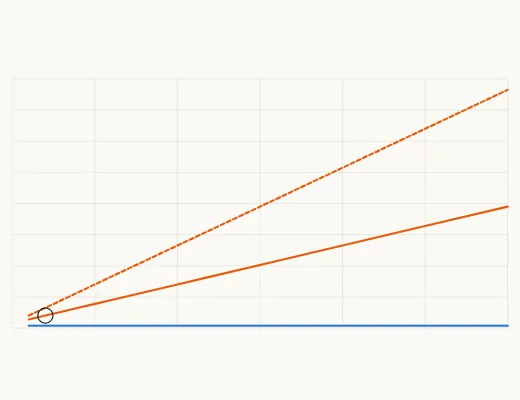
WITSML 1.4.1 against 2.0 and ETP: what changes for operators
What WITSML 2.0 and ETP change against 1.4.1.1, worked out in seconds of delay and polls a day, with a migration path that keeps the rig feed running and the questions to ask a provider.
9 min read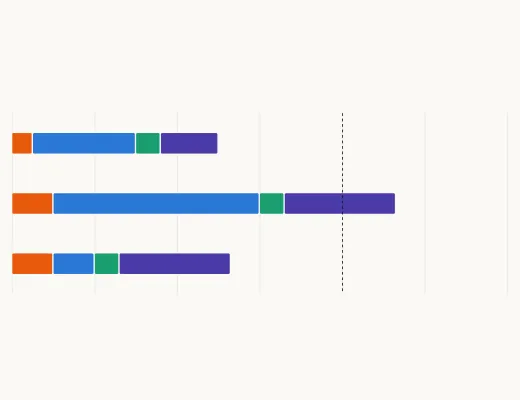
WITSML explained: objects, servers and real-time feeds
The WITSML object model, how a store differs from a stream, how a growing log is followed, how late a live reading really is, and the checks that catch a feed going wrong.
12 min read